Lorevid
Pronunciation: Reductions in English Speech
Reductions are shortened versions of words or phrases that are often used in natural, fast-paced English conversation. This article explains common reductions and how to use them.
Reductions are common in everyday spoken English. They are shortened versions of words or phrases, typically involving two or three words, and are used to make speech flow more smoothly and quickly. While useful for understanding native speakers and sounding more natural yourself, reductions should generally be avoided in formal writing or speaking situations, such as exams, unless specifically instructed to use informal language.
Common Reductions of "give me"
One common reduction is gimme, which comes from "give me."
- Gimme that pen. (Give me that pen.)
Similarly, lemme is a reduction of "let me."
- Lemme come with you. (Let me come with you.)
These words often appear in spoken English, especially in casual conversations. Understanding them helps you follow along with native speakers.
Reductions with "what is"
Many reductions involve the phrase "what is" followed by another word. These are frequently heard in informal speech.
-
Wassup is a reduction of "what is up."
-
Wassup with that? (What is up with that?)
-
Wotcha is a reduction of "what is her."
-
Wotcha name again? (What is her name again?)
-
Wotzis is a reduction of "what is his."
-
Wotzis phone number? (What is his phone number?)
These reductions are almost exclusively used in spoken English. It is not common to write them down in most contexts.
Reductions with "have"
Several modal verbs combined with "have" are commonly reduced in spoken English. These often change the pronunciation of the "have" part to an "-a" sound.
-
Couda is a reduction of "could have."
-
You couda told me that yesterday. (You could have told me that yesterday.)
-
Mita is a reduction of "might have."
-
She mita gone to the bank today. (She might have gone to the bank today.)
-
Musta is a reduction of "must have."
-
She musta taken the train. (She must have taken the train.)
-
Shoulda is a reduction of "should have.
-
You shoulda done something. (You should have done something.)
-
Wouda is a reduction of "would have."
-
I wouda gone, but I was ill. (I would have gone, but I was ill.)
These reductions are important to recognize for listening comprehension, especially when native speakers are talking quickly.
Reductions with "to"
Reductions often occur when words are followed by "to."
-
Gonna is a reduction of "going to."
-
I'm gonna go to the shops. Do you want anything? (I'm going to go to the shops. Do you want anything?)
-
Gotta is a reduction of "got to."
-
I gotta go. (I've got to go.)
-
Notice that the 't' sound in "got to" often changes to a 'd' sound when pronounced as gotta.
-
Hafta is a reduction of "have to."
-
Oh my god, you hafta meet him. (Oh my god, you have to meet him.)
-
Here, the 'v' sound in "have" changes to an 'f' sound.
-
Hasta is a reduction of "has to."
-
She hasta believe him. (She has to believe him.)
-
The 'z' sound in "has" changes to an 's' sound. This is because the 'z' sound is voiced (vocal cords vibrate) while the 't' sound in "to" is unvoiced (no vibration). Changing 'z' to 's' makes the transition smoother.
-
Otta is a reduction of "ought to."
-
You otta call in sick. (You ought to call in sick.)
-
This reduction is more common in American English, where it is often pronounced as "adda."
-
Wanna is a reduction of "want to."
-
I wanna go to the cinema. (I want to go to the cinema.)
-
Wansta is a reduction of "wants to" (third-person singular).
-
She wansta come with me. (She wants to come with me.)
-
It's important to use wansta for third-person singular subjects (he, she, it) to maintain grammatical correctness in informal speech, rather than wanna.
Reductions with "of"
Many words followed by "of" are commonly reduced. These reductions often simplify the "of" part to an "-a" sound.
-
Kinda is a reduction of "kind of."
-
I kinda like it. (I kind of like it.)
-
Kindza is a reduction of "kinds of."
-
I've got loads of kindza teas in my cupboard. (I've got loads of kinds of teas in my cupboard.)
-
Loadsa is a reduction of "loads of."
-
I've got loadsa kinds of tea in my cupboard. (I've got loads of kinds of tea in my cupboard.)
-
Lotsa is a reduction of "lots of" or "lot of."
-
There are lotsa people here. (There are lots of people here.)
-
She's had a lotsa boyfriends. (She's had a lot of boyfriends.)
-
Outa is a reduction of "out of."
-
I hafta get outa here. (I have to get out of here.)
-
Sorta is a reduction of "sort of."
-
What sorta chocolate's that? (What sort of chocolate is that?)
-
Typa is a reduction of "type of."
-
It's a typa dark chocolate. (It's a type of dark chocolate.)
-
Fronna is a reduction of "front of."
-
Park in fronna the house. (Park in front of the house.)
-
This reduction is very informal and mainly used in spoken slang.
Reductions with "you"
Many words combined with "you" are reduced, often forming a "cha" or "ja" sound. These are predominantly used in spoken, informal English.
-
Betcha is a reduction of "bet you."
-
I betcha can't guess how much that cost. (I bet you can't guess how much that cost.)
-
The 't' sound of "bet" and the 'y' sound of "you" combine to create a 'ch' sound.
-
Doncha is a reduction of "don't you."
-
Doncha wish your girlfriend was hot like me? (Don't you wish your girlfriend was hot like me?)
-
Getcha is a reduction of "get you."
-
I'm gonna getcha next time I see ya. (I'm going to get you next time I see you.)
-
"To get someone" in this context means to confront or harm someone, often as a threat.
-
Seeya is a reduction of "see you."
-
Where are you? I can't seeya. (Where are you? I can't see you.)
-
Gotcha is a reduction of "got you."
-
I gotcha this for Christmas. (I got you this for Christmas.)
-
Howdya is a reduction of "how do you."
-
Howdya like your coffee? (How do you like your coffee?)
-
Howja is a reduction of "how did you."
-
Howja do that? (How did you do that?)
-
Howjya is a reduction of "how would you."
-
Howjya do that? (How would you do that?)
-
The difference between howja (how did you) and howjya (how would you) is very subtle and depends on context and slight pronunciation nuances.
-
Jya is a reduction of "did you."
-
Jya go to the gym today? (Did you go to the gym today?)
-
Wodya is a reduction of "what are you" or "what do you."
-
Wodya doing? (What are you doing?)
-
Wodya think you're doing? (What do you think you're doing?)
-
Wancha is a reduction of "want you."
-
I wancha in my office right now. (I want you in my office right now.)
-
Wodja is a reduction of "what did you" or "what do you."
-
Wendja is a reduction of "when did you" or "when do you."
-
Wherja is a reduction of "where did you" or "where do you."
-
Whoja is a reduction of "who did you" or "who do you."
-
Whydja is a reduction of "why did you" or "why do you."
-
Woudja is a reduction of "would you."
-
Woudja do me a favor? (Would you do me a favor?)
"Don't know"
Dunno is a common reduction of "don't know."
- What's the answer? Dunno. (What's the answer? I don't know.)
- It can be spelled d-o-n-n-o or d-u-n-n-o. The latter is slightly more common.
- You can also say "I dunno." or just dunno on its own.
This article is based on the video
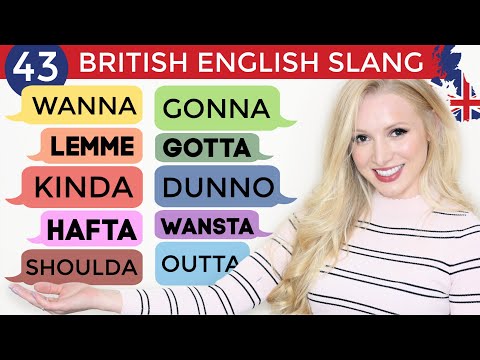 British English Slang [Advanced Pronunciation Practice] - Reductions & Contractions
English with Lucy