Lorevid
Understanding Spoken English
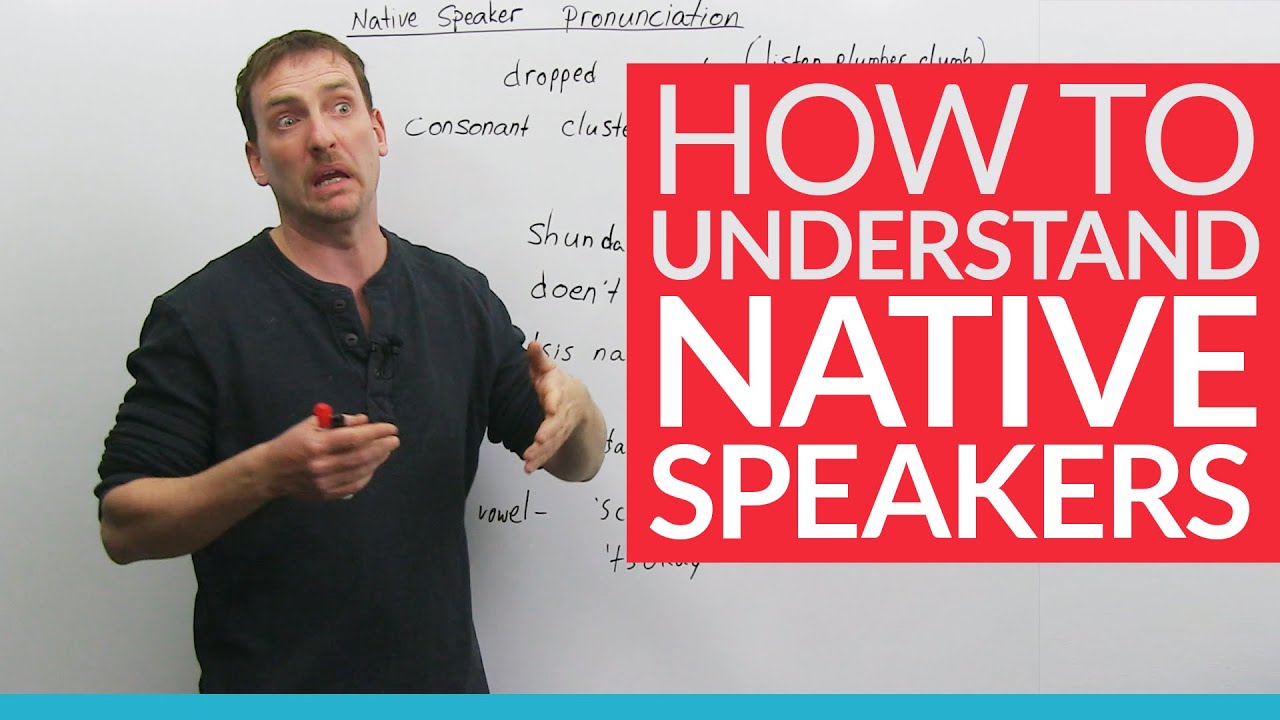
Everyday spoken English is different from textbook English. It sounds different and uses shortcuts. This article explains a sound decoding technique. It helps you understand fast speech in movies and conversations.
Many people study grammar, memorize words, and can read books. But they don't understand native speakers talking fast. When they try to watch talk shows, TV series, or movies, it feels like a completely unknown language. The problem is that there are two forms of English: textbook English and spoken English. Textbook English is spoken clearly and slowly, with every sound fully pronounced. Spoken English sounds very different because in real conversations, people try to use less effort to speak.
Book English vs. Spoken English
In everyday talk, sounds are dropped, linked together, or changed. Phrases you know from textbooks can change so much they are hard to recognize. Your brain knows the meaning of the words in a phrase, but it doesn't connect them to the continuous stream of sounds.
- What are you going to do? In real speech, this becomes What you gonna do? or What you going to do? with blurry vowels.
- I don't know often loses the clear 't' sound and sounds like one word.
- Next door is pronounced without the 't' sound at the end of the first word: nex door.
- Let me is shortened to one word: lemme.
- Don't you is combined into don'tcha.
- I want to go home sounds like the preposition is dropped and the verbs are joined with wanna.
- I have got to go is reduced to I've got to go or gotta go.
- Tell them to wait loses the initial sound of the pronoun, becoming tell 'em to wait.
- The phrase Kill them all in fast speech sounds like one word: kill 'em all.
- The common greeting How are you doing? is squeezed into one short sound block.
If you are used to only full forms, your brain tries to find individual words from your dictionary in the stream of sounds. When it can't, you stop understanding the meaning.
How Decoding Works
Your brain works like a system that predicts what information is coming. To learn to understand speech, you need to train your brain to connect new, changed sounds with old, known meanings. This process has three steps: decoding, checking, and repeating.
Decoding means trying to guess and understand the full meaning of a phrase just by its changed sound. You hear the sound lemme, you pause, and you make a guess in your mind: this sounds like the phrase let me. Only after you make a guess do you check it against the correct text. If your guess was wrong, your brain notes the mistake and adjusts its internal system for recognizing sounds. If you repeat this cycle often, your brain learns to correctly recognize the changed sound next time.
Just listening without paying attention works much worse than active listening. When English speech is playing in the background while you do other things, your brain doesn't try hard to analyze it and ignores sounds it doesn't understand. To make real progress, you need to focus your attention and work to understand the sounds.
Practical Ways to Practice
There are two ways to practice decoding: the hard way and the basic way.
For the hard way, take a short clip of spoken video or audio: a piece from a TV series, movie, or talk show. Listen to the first one or two sentences, then pause the playback. Try to understand what you heard and write down your guess on paper using English or even your native language letters. Only after that do you open the subtitles or text to check. Working this way with real material quickly improves your listening skills, but it takes time to find good clips.
The basic way is to practice with the most common sound changes. In spoken English, there are about fifty to a hundred key sound reductions and links, like gonna, wanna, lemme, don'tcha, or the dropped sound in the pronoun them. Practicing with these core changes follows the same rule: first, listen to the audio of the shortened phrase, try to understand the full form, and only then open the written text. Absolutely do not read the text before you try to hear the words yourself.
To see noticeable results, it's enough to practice decoding for five minutes every day for a month. Five minutes of focused work is enough to build a foundation for recognition, after which understanding real conversations becomes much easier.
Using Subtitles
When learning to listen, your eyes are more powerful than your ears. If there is text on the screen, your brain takes the easiest path and switches to reading, completely ignoring the sounds.
Subtitles in your native language completely stop your listening skills from developing. You just practice reading the translation in your own language quickly, without remembering the sound of the English words.
English subtitles, if used all the time, have the same side effect: they train reading skills, not listening comprehension. They are useful only as a checking tool after you try to decode on your own. First, listen to the phrase with the text off, make a guess, and then turn on the subtitles for a second to check if your guess was correct.
Ways to Speed Up Progress
To learn to understand fast speech more quickly, use these extra techniques:
- Copying facial expressions and speech. When watching videos with natural speech, it's helpful to repeat phrases right after the speaker. Try to copy not only the intonation and sounds but also the movements of your jaw and mouth. Repeating the physical movements helps your mouth and throat get used to the natural links between words, which automatically helps you recognize those same links when others speak them.
- Increasing playback speed. Listening to recordings at 1.25 or 1.5 times the normal speed forces your brain to work harder. After you get used to the faster pace, speech at normal speed will sound calmer and clearer.
- Actively producing spoken English. This is the skill of using spoken shortcuts yourself in everyday situations. If you know how to say phrases in a shortened, spoken way, you will instantly recognize them when others speak them.
Learning the core set of the most common sound changes gives you a base. This base allows you to understand dialogues in movies and in daily life without constant effort.
This article is based on the video
 Как слышать и понимать английскую речь за 5 минут. Техника быстрого декодирования!
Английский Язык Сразу