Lorevid
German Alphabet Pronunciation for Beginners
This article will teach you how to pronounce the letters of the German alphabet. You will learn which letters sound different and about special cases.
The German alphabet has the same letters as the English alphabet, but there are some special things about pronunciation. Some letters have an umlaut, which means they have two dots above them. Some letters change their sound depending on whether they are at the beginning or end of a word. There are also two versions for each vowel: a long and a short one.
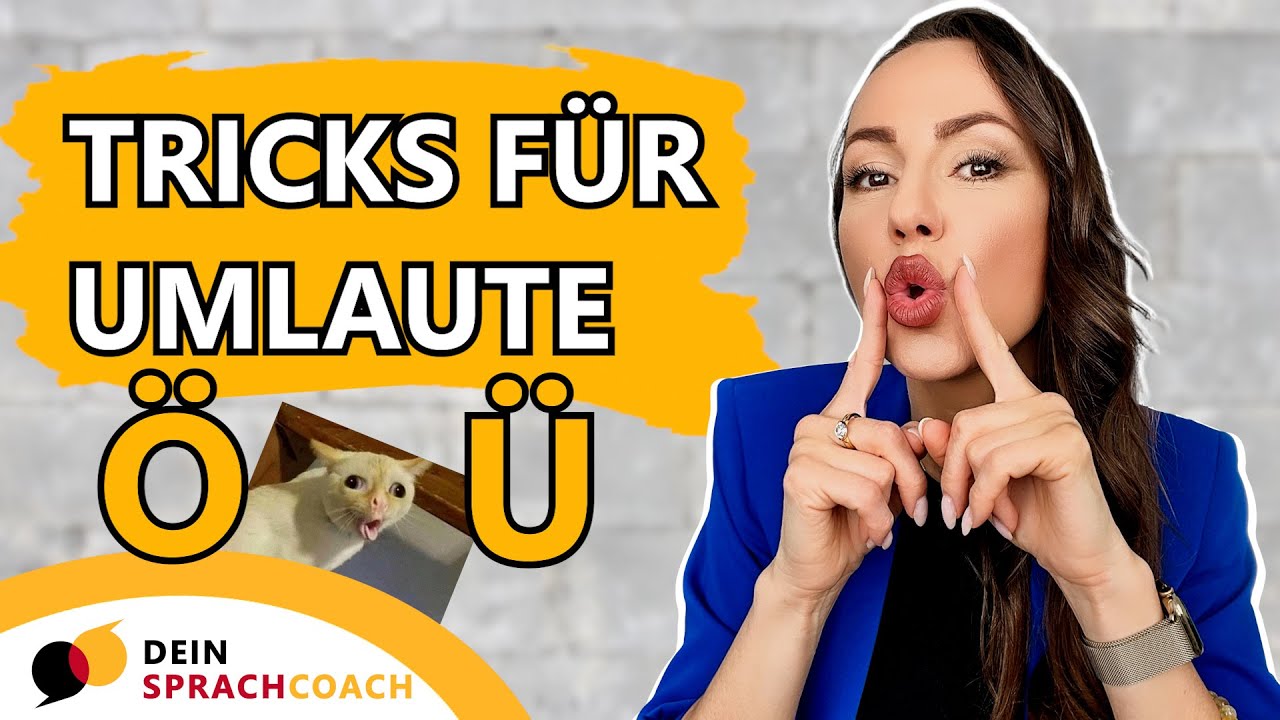
The Umlauts
In German, there are three vowels with umlauts. These are ä, ö, and ü. These umlauts are their own sounds and are pronounced differently from vowels without umlauts.
- ä
The ä sounds similar to a short "e" in English. It appears in words like Käse and Äpfel.
- ö
The ö is pronounced with rounded lips. Examples are Öl and schön.
- ü
The ü is also pronounced with rounded lips, but the sound is different from the ö. Words with ü include über and Tür.
Vowels: Long and Short
Every vowel in German can be pronounced long or short. It is important to learn the difference because the length of the vowel can change the meaning of a word.
-
a
-
Long a: Vater, Bahn
-
Short a: Apfel, Mann
-
e
-
Long e: Leben, Thema
-
Short e: Bett, Essen
The e is the most common letter in German texts.
-
i
-
Long i: Igel, Biene
-
Short i: Insel, Fisch
When an i is followed by an e (ie), the i is always pronounced long, for example in liegen.
-
o
-
Long o: Boot, Floh
-
Short o: Topf, Sonne
-
u
-
Long u: Uhr, Kuh
-
Short u: unter, Bus
A vowel is also pronounced long when it is doubled, for example the oo in Boot or the aa in Saal.
Consonants with Special Pronunciations
- b
The b can be pronounced softly or hard.
-
Soft at the beginning of a word: Ball, Brot
-
Hard at the end of a word: Stab, grob
-
c
The c is usually pronounced like a k, for example in Computer, Camping. It is different only in a few words, like Cello.
- ch
The combination ch has two different pronunciations:
-
Like in Dach or Loch. This is a hard sound made in the back of the throat.
-
Like in ich or Tuch. This is a softer sound.
-
d
The d can also sound soft or hard.
-
Soft at the beginning of a word: Dorf, Dach
-
Hard at the end of a word: Hand
-
g
The g is pronounced normally in words like Garten or groß. When a word ends in -ig, it is often pronounced like -ich, for example Honig. However, there are regional differences; in southern Germany, people tend to say Honig.
- h
The h has a special function: when it comes after a vowel, the vowel is pronounced long. For example, the a in Sahne is long.
- j
The j is usually pronounced like a "y" in "yes," for example in ja, Jacke. In words from other languages, it can sound different, like in Jargon or Jalousie.
- pf
The letters p and f sometimes combine at the beginning of a word to form the sound pf, for example in Pferd or Pfanne.
- qu
In German, the letters q and u almost always appear together. They are pronounced like kv, for example in Qual, Quelle.
- r
The r is a complicated letter because it has many different pronunciations.
-
Sometimes it is made in the back of the throat, like in rot, Brot.
-
When the r is at the end of a word after a vowel, like in Vater or Mutter, it is sometimes not heard clearly at all. It becomes vocalized, meaning it sounds almost like an a.
-
s
The s can be soft or hard.
- Soft at the beginning of a word: Sonne, Salz
- Hard at the end of a word: Haus, Bus
The s often combines with other consonants, for example with t in Stadt or with p in Sport.
- sch
The letters s, c, and h together (sch) are always pronounced like "sh" in English, for example in schön, waschen.
- ß
The ß is a special letter in German that does not exist in any other language. It is also called the "sharp S". It makes the vowel before it long, for example in Fuß, Straße. In Switzerland, the ß is not used; they write ss instead.
- v
The v is sometimes pronounced like an f, for example in Vater. But sometimes it is pronounced like a w, for example in Vase.
- w
The w is pronounced like a "v" in English, for example in Wasser, Wald.
- x
The x is rare and appears in words like Text or Hexe.
- y
The y has two pronunciations:
-
At the beginning of a word, like a j: Yoga
-
In the middle of a word, like a ü: Typ, System
-
z
The z is pronounced like the combination ts, for example in Zebra, Zunge.
Double Consonants
When two identical consonants appear next to each other (e.g., ff, nn), the vowel before them is pronounced short. For example, in Kaffee or Sonne.
Diphthongs (Two-Sound Vowels)
A diphthong is a combination of two vowels that together form a new sound.
- ei or ai
The combinations ei and ai are both pronounced like "eye" in "sky," for example in mein, Stein, Seite, Leib. The combination ei is much more common than ai.
- au
The combination au is pronounced like "ow" in "cow," for example in Stau, bauen.
- eu or äu
The combinations eu and äu are both pronounced like "oy" in "boy," for example in heute, Zeug, Häuser, Mäuse.
This article is based on the video
 German Alphabet & Pronunciation - Full Guide
Easy German